Sound Healing: What a Sound Bath Does, What the Research Found, and How to Fill One
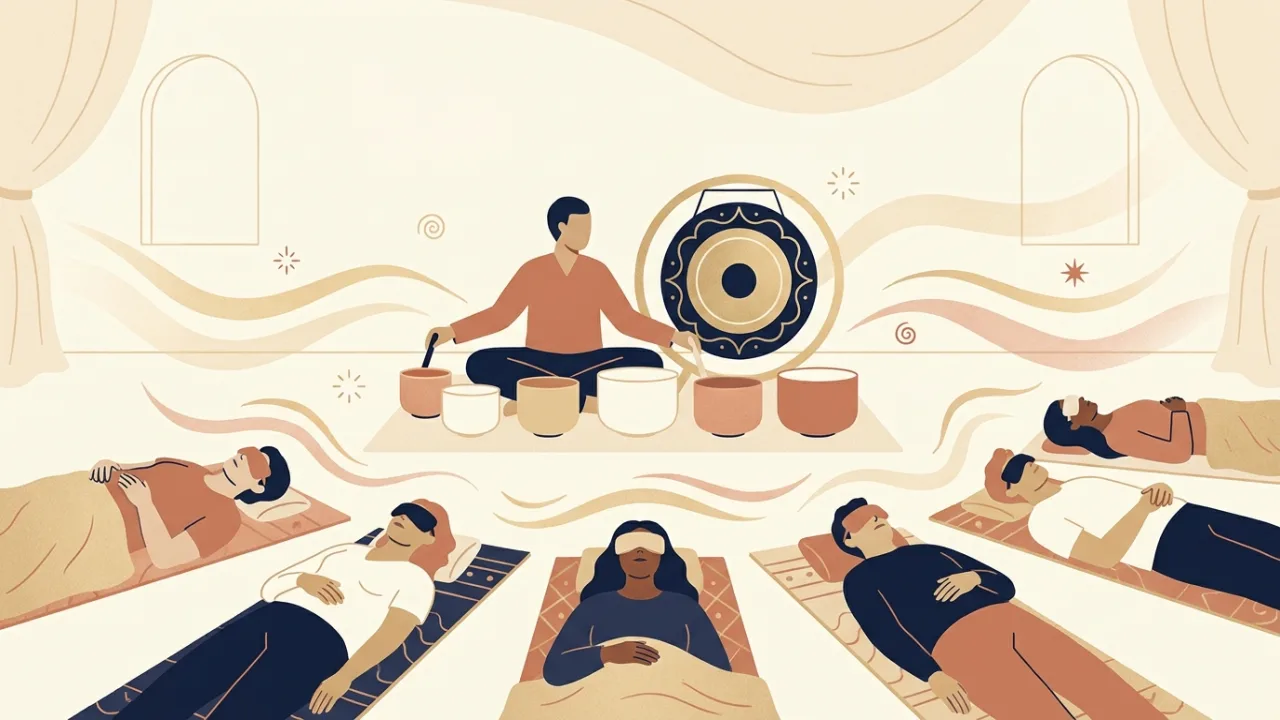
Sound healing is the practice of using instruments such as crystal or Tibetan singing bowls, gongs, chimes and the voice to bring a room of people into a deep resting state. The most common format is the sound bath: participants lie on mats, the practitioner plays for 45 to 75 minutes, and nobody has to do anything but listen. This guide covers what a sound bath is, what the published studies actually measured, and how sound healers run the recurring series that pays the rent.
It is one of eight practice guides collected in wellness practices: a guide to eight ways of holding space.
What sound healing is
The instruments
Tibetan bowls are metal alloys struck or rubbed with a mallet. Crystal bowls are quartz, tuned to a note, with a purer sustained tone. Gongs produce a wash of overtones that builds and fades. Many practitioners add tuning forks, chimes, ocean drums and voice. The choice shapes the session: bowls for a settled, steady tone, gong for a journey with peaks.
The sound bath format
People arrive, lie down with blankets and eye pillows, and the practitioner opens with a short breath or intention. The playing starts quiet and builds. There is usually a silent period near the end and a gentle return with a chime. Group sound baths run 10 to 60 people depending on the room. Private one-to-one sessions, often with bowls placed on or around the body, are the other half of many practices.
What the research says about sound healing
The evidence base is small and young, so the honest phrase is "early research," not "proven." What exists points the same direction.
The San Diego singing bowl study
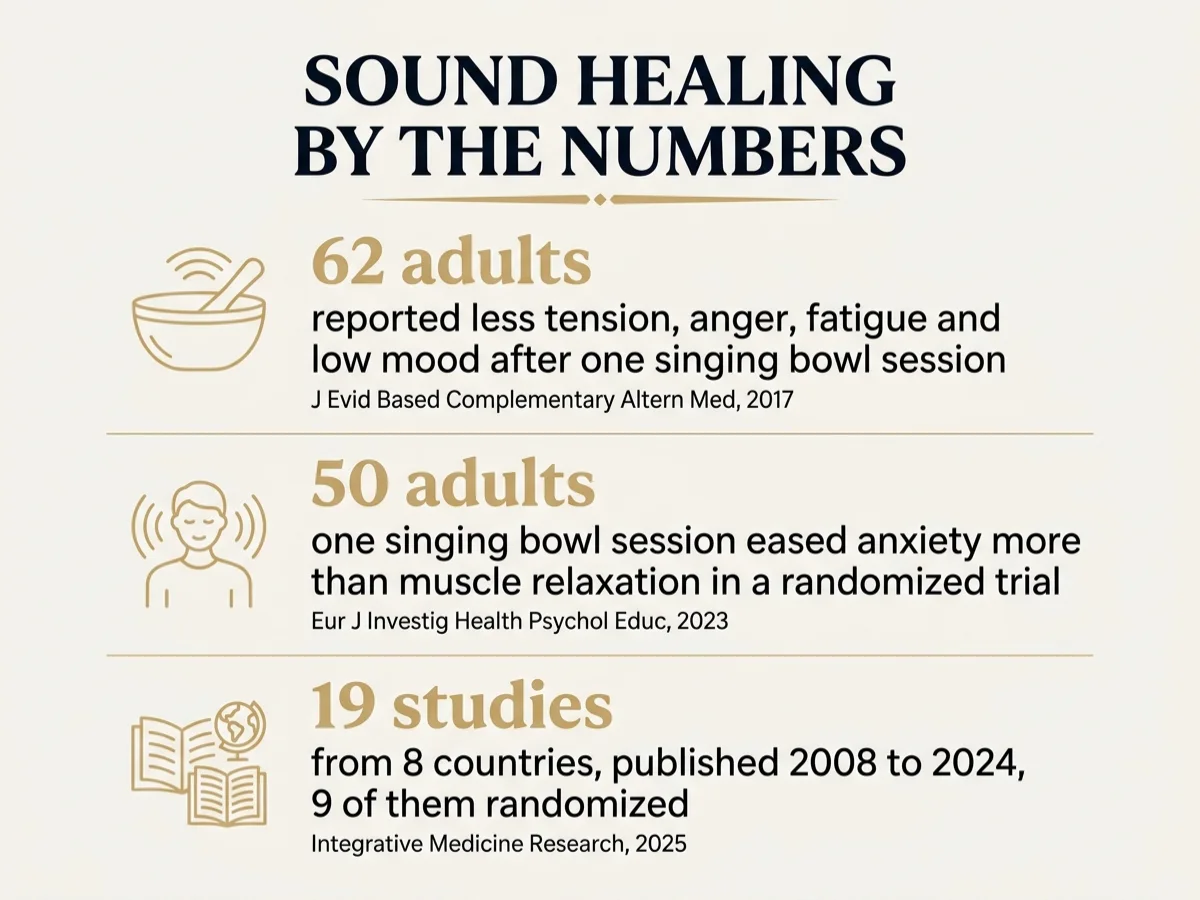
Researchers at the University of California San Diego measured mood in 62 adults before and after a Tibetan singing bowl meditation. Tension, anger, fatigue and depressed mood all dropped significantly, and spiritual well-being rose. One detail matters for anyone marketing to newcomers: people who had never done a sound meditation before had a larger drop in tension than experienced participants.
Tibetan singing bowl meditation may be a feasible low-cost low technology intervention for reducing feelings of tension, anxiety, and depression, and increasing spiritual well-being.
Tamara L. Goldsby, lead author, University of California San Diego, Journal of Evidence-Based Complementary and Alternative Medicine
A controlled trial and a systematic review
A 2023 randomized trial put 50 adults with high state anxiety into three groups: one singing bowl session, progressive muscle relaxation, or a waiting list. The bowl group reported a larger drop in anxiety and showed measurable changes in brain activity and heart rate variability. A 2025 systematic review then counted the whole field: 19 clinical studies from eight countries, published between 2008 and 2024, nine of them randomized.
Nineteen studies is a thin base. An earlier review found only four and declined to recommend singing bowl therapy at that stage. Say "people report" and "early studies found," and you will never have to walk a claim back.
Running a sound healing practice
Sound healers sell the same night again and again: the Thursday sound bath, the full moon gong, the monthly restorative. The business runs on repetition, and so do its problems.
The recurring series
Rebuilding the same event by hand every week is where most practitioners lose an hour and make a typo. Set the series once, with its price, its cap and its reminders, and every date is created for you. When a night fills, a waitlist keeps the people you would otherwise have turned away.
The venue
Most sound baths happen in rented rooms: a yoga studio between classes, a church hall, a wellness center. Two series in two venues with no shared view of which room is booked when is how double bookings happen. A venue calendar that sits beside the event list fixes that.
Add-ons at the door
Participants buy things after a sound bath: a journal, an oil blend, a recording. Attaching products and add-ons to the ticket means they add them when they book, and the income lands next to the ticket income instead of in a cash box.
What each night made
A room at $150, twenty tickets at $35, and a co-facilitator to pay. Knowing the number for each night, as it happens, is the difference between a series that quietly loses money and one that pays for the new gong. Colibri helps you organize your income and expenses. It is not a tax preparer, accountant, or a substitute for professional tax advice.
Questions sound healers ask
Can I set up a weekly recurring sound bath?
Yes. Create the series once and ColibriOS schedules every gathering, with reminders and a waitlist when a night fills.
Can I sell merch or oils at the event?
Attach products and add-ons directly to the ticket, so participants can add a journal or an oil when they book.
Can I book private sound healing sessions too?
Yes. One-to-one sound sessions are a session type with their own length and price, booked from the same calendar as your sound baths.
Where ColibriOS fits
Set a recurring series once, manage the venue, sell add-ons at the door, and let reminders do the filling, all from your own website. The books are kept as each ticket is paid.
See the rest of the practice guides in wellness practices, check pricing, or create your account and set up your first series.
About the author

Stephanie Holbrook
Founder, ColibriOS
Stephanie Holbrook is the founder of ColibriOS. She runs Dragonfly Web Designs from Silver City, New Mexico, and is the friend people call when the bank statements and the mileage log need sorting before tax time. She builds software for practitioners and retreat hosts who would rather be with their people than in a spreadsheet, and writes about pricing, bookings and the bookkeeping side of running a practice.
More about the people behind ColibriOS- Breathwork: What It Is, What the Trials Show, and How to Run a Breathwork Practice (5 min read)
- Dance and Movement: What Ecstatic Dance Is, What the Research Found, and How to Fill the Floor (5 min read)
- Integration Circles: What Integration Is, Why the Numbers Are Growing, and How to Hold One (5 min read)
Run your practice from one place
Bookings, payments, retreats, and follow-up. Colibri keeps the admin light so you can stay present.
Join free until Cyber MondayGet the launch notes
One email when something worth knowing happens: launch pricing, what shipped, new videos. No noise. Unsubscribe any time.
By signing up you agree to receive emails from ColibriOS. Unsubscribe any time.