Meditation: What It Is, How Many People Practice, and How to Run a Meditation Teaching Practice
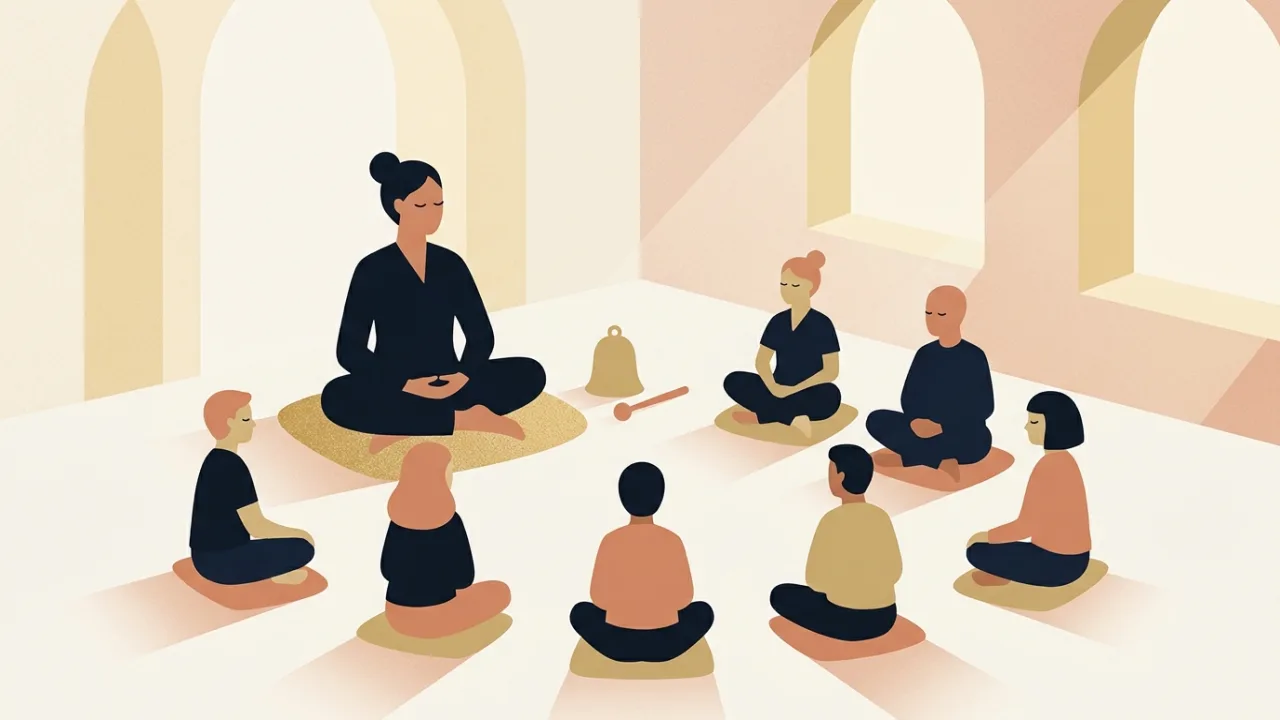
Meditation is the most widely practiced of the eight practices in this series, and the one with the longest paper trail. About one in six American adults now meditates. If you teach meditation or mindfulness, this guide gives you the numbers you can quote, the studies behind them, and a clear picture of what running a teaching practice takes: the weekly sit, the eight-week course and the private sessions in between.
It is part of wellness practices: a guide to eight ways of holding space.
What meditation is
The main styles people teach
Mindfulness meditation trains attention on the breath and body and on whatever arises, without judgment; it is the style most studied in clinical trials. Loving-kindness practice cultivates goodwill toward self and others. Concentration practices use a single object, a mantra or a candle. Body scans, walking meditation and open awareness fill out most teachers' repertoires. Secular mindfulness courses such as MBSR run eight weeks; Buddhist-rooted sanghas meet weekly for a sit and a talk.
What a teaching practice looks like
Most teachers hold a weekly drop-in sit, run a multi-week course two or three times a year, and see a handful of students privately. Some add a day-long or weekend retreat. Each format has a different price, a different cap and a different rhythm, and they all share one teacher and one calendar.
What the numbers say about meditation
Meditation has the clearest usage data of any practice here, because the National Health Interview Survey has asked about it for two decades.
One in six adults
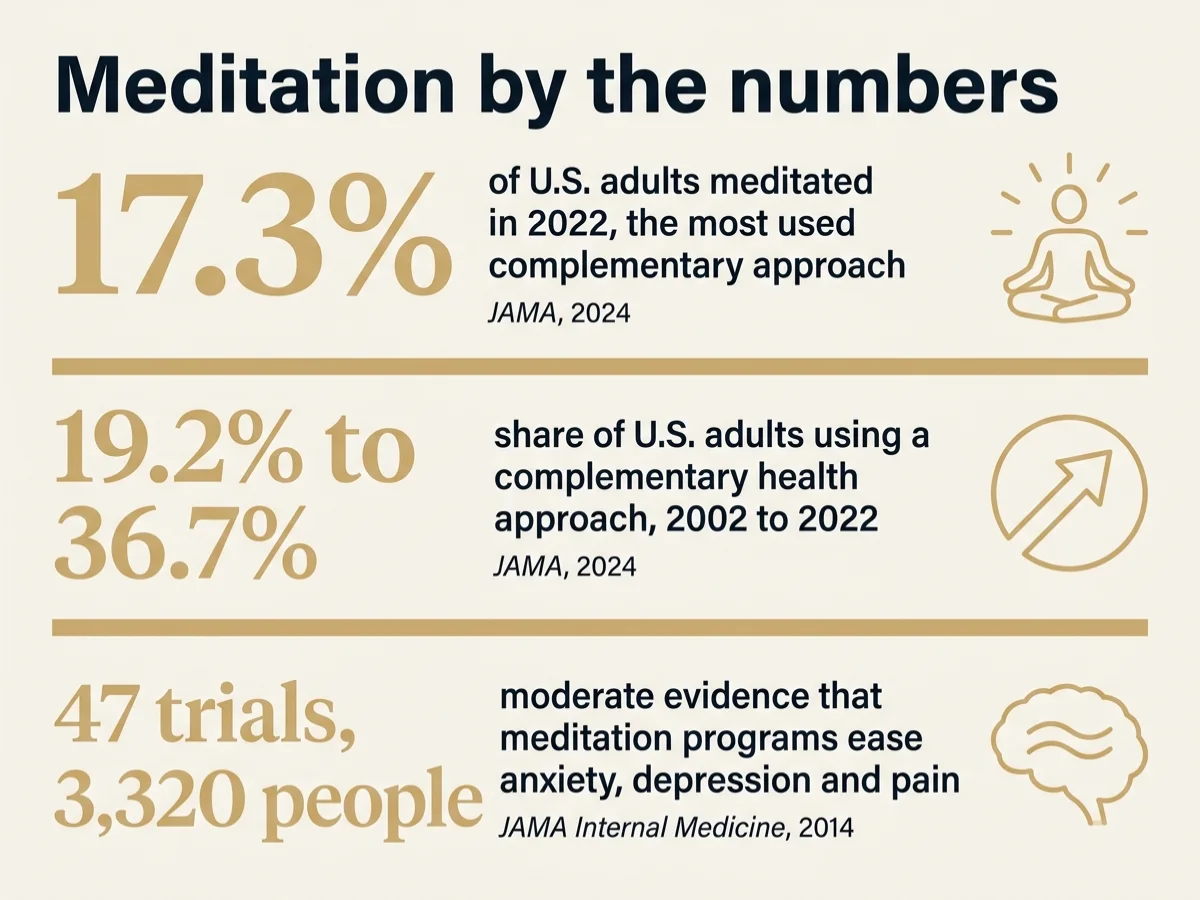
The NIH's National Center for Complementary and Integrative Health reported in JAMA that 17.3% of U.S. adults used meditation in 2022, the highest of the seven approaches tracked. Use of any of the seven rose from 19.2% of adults in 2002 to 36.7% in 2022. A separate analysis of 134,959 survey respondents by the University of Melbourne put meditation at 18.3% of adults, about 60.5 million people, with growth across most age, income and health groups and accelerating among people 65 and older.
For a teacher, the second number is the one to sit with. Growth is broad. The person who walks into your Wednesday sit is as likely to be a retiree as a tech worker.
What the trials found
The benchmark review is from Johns Hopkins: 47 randomized trials with 3,320 participants in JAMA Internal Medicine. Mindfulness programs showed moderate evidence of improved anxiety, depression and pain at eight weeks, with effect sizes around 0.3 to 0.4. The review found no evidence that meditation beat active treatments such as exercise or therapy. So: "supports," not "cures."
Clinicians should be aware that meditation programs can result in small to moderate reductions in multiple negative dimensions of psychological stress.
Madhav Goyal, MD, MPH, lead author, Johns Hopkins University, JAMA Internal Medicine
Running a meditation teaching practice
The teaching is quiet. The admin around it is not, mostly because the same sit has to be created again every week and the course lives on a second platform.
The weekly sit
A recurring sit is the spine of the practice and the first thing to stop rebuilding by hand. Set it once with its time, its suggested donation or price, its cap and its reminder, and every week is scheduled. A waitlist catches the nights the room fills.
The multi-week course
An eight-week course needs a place for the recordings, the weekly readings and the home practice log. Teachers often buy a second platform for this and then spend their evenings copying names between it and the booking tool. Wrapping the course around the sits, in the same place students already book, keeps them practicing between sessions and keeps you out of the spreadsheet.
Private sessions
One-on-one sessions have their own length and price and tend to live in a third calendar. They belong on the same one as the sit and the course, so a student who books a private session already has a record that shows every sit they attended.
Dana, donations and the books
Many sanghas run on dana, many courses on a set fee, and most teachers on a mix. Every donation, ticket and course payment should land in the books the day it arrives, so the year-end picture is real. Colibri helps you organize your income and expenses. It is not a tax preparer, accountant, or a substitute for professional tax advice.
Questions meditation teachers ask
Can I run a recurring weekly sit?
Yes. Create the series once and ColibriOS schedules every session, with reminders and a waitlist when a night fills.
Can I host a multi-week meditation course?
Wrap a course around your sits so students keep practicing between sessions, all in one place, with the recordings and the readings beside the schedule.
Can students pay by donation?
Yes. An offering can carry a fixed price, a suggested amount or a pay-what-you-can option, and every payment is recorded the same way.
Where ColibriOS fits
Set your recurring sits once, host the course, book the room, and let reminders keep the seats full, so you can just teach. The books are kept as you go, on your own website.
Read the other practice guides in wellness practices, see the plans, or create your account and schedule your first sit.
About the author

Stephanie Holbrook
Founder, ColibriOS
Stephanie Holbrook is the founder of ColibriOS. She runs Dragonfly Web Designs from Silver City, New Mexico, and is the friend people call when the bank statements and the mileage log need sorting before tax time. She builds software for practitioners and retreat hosts who would rather be with their people than in a spreadsheet, and writes about pricing, bookings and the bookkeeping side of running a practice.
More about the people behind ColibriOS- Breathwork: What It Is, What the Trials Show, and How to Run a Breathwork Practice (5 min read)
- Dance and Movement: What Ecstatic Dance Is, What the Research Found, and How to Fill the Floor (5 min read)
- Integration Circles: What Integration Is, Why the Numbers Are Growing, and How to Hold One (5 min read)
Run your practice from one place
Bookings, payments, retreats, and follow-up. Colibri keeps the admin light so you can stay present.
Join free until Cyber MondayGet the launch notes
One email when something worth knowing happens: launch pricing, what shipped, new videos. No noise. Unsubscribe any time.
By signing up you agree to receive emails from ColibriOS. Unsubscribe any time.