Retreat Planning Template: A 12-Week Checklist From Idea to Follow-Up
Most retreat planning advice is a list of things to remember. This is a list of things to do, in the order they have to happen, with the deadline each one actually has. Twelve weeks is the shortest runway that works for a multi-day retreat with a venue deposit; if you have longer, stretch the front half.
Copy it, put your dates against it, and cross things off.
What a retreat planning template should include
A good template is not a mood board. It is a project plan with dates, and it answers three questions for every task: what, by when, and who. If you are planning a yoga retreat, a wellness weekend, a workshop intensive or a small corporate offsite, the bones are the same.
The pieces every template needs
- A timeline that works backwards from the retreat date, so every deadline is real.
- A budget with fixed costs, per-person costs, your time, and a contingency line. This is the part most retreat leaders skip, and the part that decides whether they run it again.
- A venue and accommodation brief: capacity, room mix, what the per-person rate includes, cancellation terms, kitchen and dietary handling.
- A registration and money section: deposit, balance date, refund terms, early-bird window, payment plans.
- A guest logistics section: intake answers, dietary list, rooming, transportation and transfers, the pre-retreat guide.
- A sample retreat agenda for one day, so the schedule has a shape before you sell it. Sessions, meals, free time, and an evening close.
- A follow-up section, because the week after is where the next retreat gets sold.
Spreadsheet, PDF or software
You can run this checklist from a spreadsheet, an Excel file, a printed PDF, or a retreat planner app. The format matters less than the discipline of putting dates against every line. The template below is customizable: swap the intervals, keep the order. A step-by-step guide only helps if the steps stay in sequence.
How far in advance should you plan a retreat?
Twelve weeks is the floor for a multi-day retreat with a venue deposit and a room to fill. Six months is comfortable. A year is normal for a destination retreat or a first-time host who wants to fill twenty seats without pressure.
Why the runway matters more than it used to
The people you are planning for already travel for this. In its Global Wellness Economy Monitor 2025, the Global Wellness Institute reports that wellness trips grew from 6.3% of all tourism trips in 2019 to 8.3% in 2024, and from 14.2% of all tourism spending to 17.6%. Wellness travel is a small slice of trips and a much larger slice of money, which is another way of saying your guests are used to paying for a well-run experience.
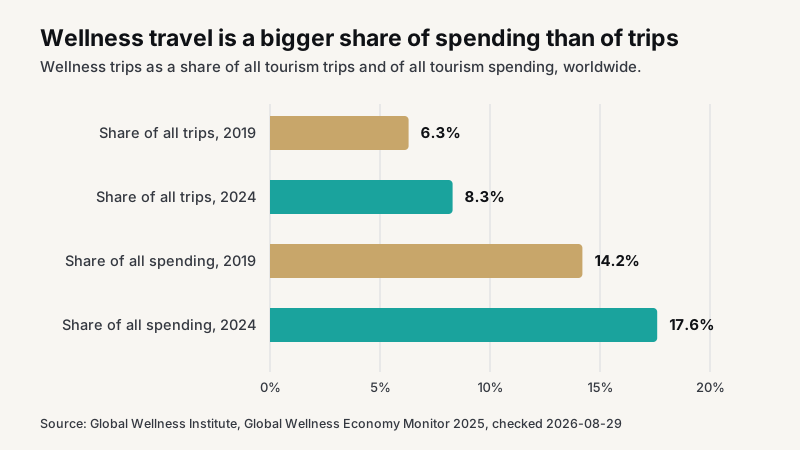
The same report puts wellness tourism spending at 136% of its 2019 level in 2024, against 110% for tourism as a whole. Venues know this. The good ones book out, which is why the venue deposit sits at the very top of the checklist.
Work backwards, not forwards
Arielle Jones, an event systems architect who builds timelines for retreat hosts, describes the shift that makes a plan hold together:
Work backwards from your retreat date. That one mindset shift can completely change how organized and sustainable your retreat planning process feels.
Arielle Jones, event systems architect, ariellejones.com
That is the whole logic of the checklist below. Each checkpoint is the last responsible moment for its tasks, counted back from day one.
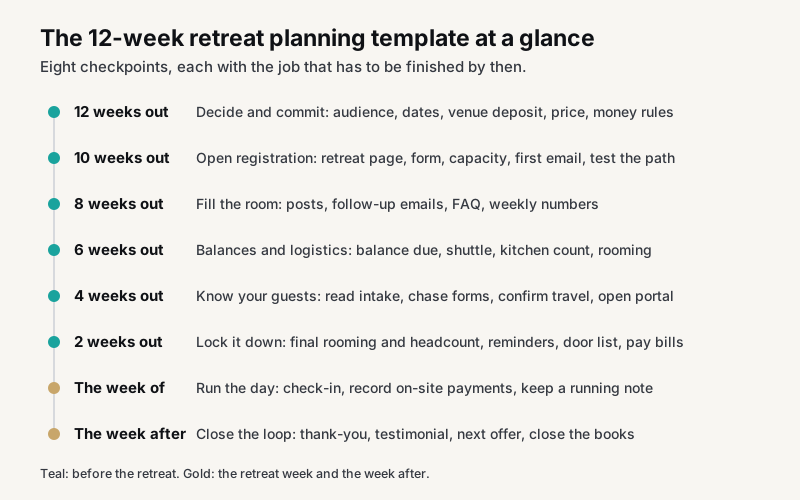
The 12-week retreat planning checklist
12 weeks out: decide and commit
- Decide who it is for and what changes for them. One sentence. Everything below follows from it.
- Pick dates and hold the venue. Most venues want a deposit to hold dates. Before you pay it, ask: capacity, room mix (private, twin, shared), what is included in the per-person rate, the cancellation terms, and the kitchen's allergy handling.
- Price it. Fixed costs, per-person costs, your time, then margin and the early-bird math. Do not guess; how to price a wellness retreat has the working example.
- Set the money rules. Deposit amount, balance due date (six weeks out is the standard), refund terms, early-bird deadline, scholarship seats if any. Write them once and use the same wording everywhere.
- Confirm co-facilitators. Dates, fee, what they lead, travel.
10 weeks out: open registration
- Build the retreat page. Dates, place, who it is for, the daily shape, what is included, prices per room type, the deposit and balance terms in plain words, and one Register button.
- Attach the registration form. Contact, emergency contact, food, rooming preferences, travel, health, waiver, marketing consent. The full list is in the retreat registration form template.
- Set capacity and the waitlist. Sold out should mean sold out, and a cancellation should offer the seat to the next person without you doing anything.
- Send the first email to your list. The people who already know you fill the first third of the room. Give them the early-bird price and a reason to decide this week.
- Test the whole path yourself. Register, pay a deposit, read every email that arrives, cancel, and check the refund. Then delete the test.
8 weeks out: fill the room
- Post the retreat where your people are. Two posts a week is enough if each one says something different: the place, the practice, a past guest, the food, the daily rhythm.
- Write the follow-up sequence. Three emails to anyone who visited the page or asked a question and did not register: what a day looks like, who it is for and who it is not for, and the early-bird deadline.
- Answer questions in one place. Every question you get twice goes on the retreat page.
- Watch the numbers weekly. Registrations, deposits in, balance pending, seats left. If the room is under half full at six weeks, that is the moment to decide about a second early-bird window or a smaller venue, not two weeks out.
6 weeks out: balances and logistics
- Balance due. The reminder goes out a week before the date, and again on the day. Late balances get one personal message, then the seat goes to the waitlist.
- Book the shuttle and the extras. Airport transfers, any excursion, massage or bodywork slots, printed materials.
- Confirm the kitchen count. Dietary requirements and allergies per person, from the registration answers, sent to the venue in their format.
- Assign rooms, first pass. Use the rooming preferences from the form. Expect to redo a third of it.
- Send the pre-retreat guide. Address, arrival window, what to bring, what is provided, the daily rhythm, who to contact on the day.
4 weeks out: know your guests
- Read every intake answer. Health notes, access needs, what each person is hoping for, what they are nervous about. This is the facilitators' briefing; read it together.
- Chase missing forms. Anyone who paid but has not completed the intake gets one reminder with the link.
- Confirm travel details. Ask everyone once: has anything changed? Update the shuttle list.
- Open the guest portal. Schedule, address, packing list, documents, and a place for guests to introduce themselves if you want that.
2 weeks out: lock it down
- Final rooming list to the venue, with the dietary list attached.
- Final headcount for meals, transfers and materials.
- Reminders scheduled. A week before, the day before, and the morning of, each one short and in your voice.
- Print the door list. Or make sure it opens on your phone: name, room, arrival, dietary, emergency contact.
- Pay the balances you owe. Venue, facilitators, transport. Get every receipt into the books now, not in January.
The week of: run the day
- Check people in as they arrive. From the list, on your phone. Late arrivals and walk-ins go on the same list.
- Record anything paid on site. Balances, add-ons, a bodywork slot; every one lands on the guest's record and in the books that day.
- Keep a running note of what to change next time. You will not remember in three weeks.
The week after: close the loop
- Thank-you email within three days, with the recording, the photos (only for people who consented), the reading list, whatever you promised.
- Ask for a testimonial while the feeling is fresh, and ask permission to use it.
- Offer the next thing. A follow-up circle, a 1:1 package, next year's dates. The people who just came are the audience for it.
- Close the books. Every registration and add-on is income, every venue, food, travel and facilitator payment is an expense. What the retreat actually made, after your time, decides whether you run it again and at what price.
Colibri helps you organize your income and expenses. It is not a tax preparer, accountant, or a substitute for professional tax advice.
Questions that come up every time
How do you plan a retreat?
Decide the outcome, hold the venue, price it, open registration, fill the room, then handle logistics in the order guests will feel them: money, food, rooms, travel, schedule. That is the checklist above, and it works for a yoga retreat, a breathwork weekend, a writing workshop or a team offsite. What changes between them is the agenda, not the sequence.
What is the average cost of a retreat, and how do you budget for one?
There is no useful average, because a three-night domestic retreat for ten and a week in Portugal for twenty-four are different businesses. What is useful is a retreat budget built from your own lines: venue, accommodation, catering, facilitator fees, transportation, supplies, insurance, marketing, payment processing, and a 10% contingency. Divide the fixed costs by the number of seats you are confident you will fill, not by capacity, and add the per-person costs on top. The worked example in the pricing guide does exactly that.
One data point to keep in view: the Global Wellness Institute's 2025 monitor reports that domestic wellness tourism makes up 95% of all wellness trips in the United States. If you are hosting in the US, budget for guests who drive, and put the money you might have spent on flights into the venue and the food.
How do you create a retreat schedule or agenda?
Start with the anchors that do not move: arrival, meals, and departure. Place your core sessions where energy is highest, usually morning and late afternoon. Then protect free time. Guests come to reconnect and recharge, and a schedule with no gaps reads as a conference. A sample retreat agenda for a full day might look like this: 7:00 am movement, 8:30 am breakfast, 10:00 am main session, 12:30 pm lunch, afternoon open until 4:00 pm, 4:00 pm second session, 6:30 pm dinner, 8:00 pm circle. Flexibility is part of the design; the check-ins during the day tell you when to adjust.
What should a retreat menu include?
Whatever the kitchen can make well, for every dietary need on your list, at the times your schedule says. Collect dietary requirements on the registration form, send the venue the list in their format at six weeks out, and confirm the final count at two weeks. Simple, abundant and on time beats ambitious and late. If you cater independently, price it per head and put it in the budget as a per-person cost.
What are the common mistakes?
Starting too late, pricing from feeling, filling the room before the money rules are written, keeping registrations in one tool and payments in another, and not reading the intake answers until the night before. Every one of those is a line on the checklist for a reason.
Where this runs in one place
Every line above that says "list" or "reminder" or "portal" is a thing ColibriOS does from the registration itself: capacity and waitlist, deposit and balance schedule, the intake answers on each guest's record, rooming and the rooming list, the guest portal, scheduled reminders, door check-in, and income and expenses in the books as they happen. The retreat side is on retreat booking software and retreat management software; the host's whole year is on the retreats page.
Start on ColibriOS, put your dates against this list, and run the next one from one screen.
Updated
About the author

Stephanie Holbrook
Founder, ColibriOS
Stephanie Holbrook is the founder of ColibriOS. She runs Dragonfly Web Designs from Silver City, New Mexico, and is the friend people call when the bank statements and the mileage log need sorting before tax time. She builds software for practitioners and retreat hosts who would rather be with their people than in a spreadsheet, and writes about pricing, bookings and the bookkeeping side of running a practice.
More about the people behind ColibriOSRun your practice from one place
Bookings, payments, retreats, and follow-up. Colibri keeps the admin light so you can stay present.
Join free until Cyber MondayGet the launch notes
One email when something worth knowing happens: launch pricing, what shipped, new videos. No noise. Unsubscribe any time.
By signing up you agree to receive emails from ColibriOS. Unsubscribe any time.